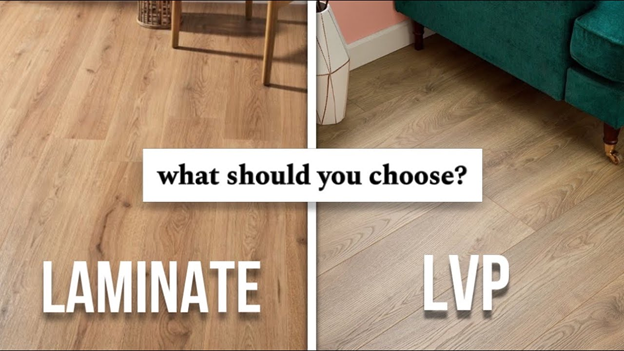
Laminate and vinyl are two of the most popular flooring choices in America, and for good reason. They are both affordable, durable, and offer stunningly realistic wood and stone looks. But while they may look similar in the store, they are fundamentally different products. This often leads to one of the biggest questions for homeowners: which one is actually better?
To answer this, let’s follow two neighbors, Maria and David, who are both renovating. Maria is turning her basement into a playroom and needs something that can handle potential moisture and spills. David is updating his main-floor living room on a tight budget and wants the most authentic wood look and feel he can get. Their different projects will perfectly illustrate the unique strengths of each flooring type. The “better” choice depends entirely on the room and your priorities.
Round 1: Core Composition & Water Resistance (The Deciding Factor)
This is the single most important difference between the two.
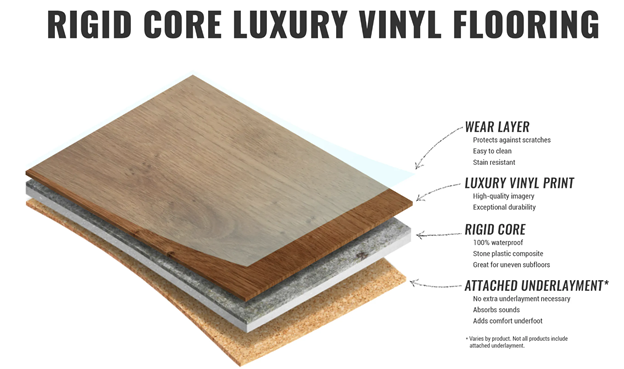
- Vinyl Flooring: Is made of 100% synthetic polymer materials, primarily PVC. This means it is essentially plastic through and through, making it 100% waterproof. A vinyl plank can be fully submerged in water, dried out, and re-installed with no damage.
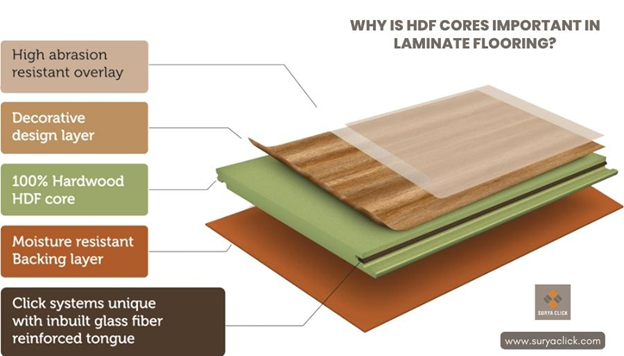
- Laminate Flooring: Has a core made of high-density fiberboard (HDF), which is essentially a wood byproduct. Because of this wood-based core, laminate is vulnerable to moisture. While the top surface is water-resistant, if water seeps into the seams and reaches the core, the planks can swell, warp, and be permanently damaged.
The Verdict: For Maria’s basement renovation, where moisture is a potential issue, vinyl is the undisputed champion and the only suitable choice.
Round 2: Appearance & Realism
This is where the lines get blurrier, but laminate often has a slight edge.
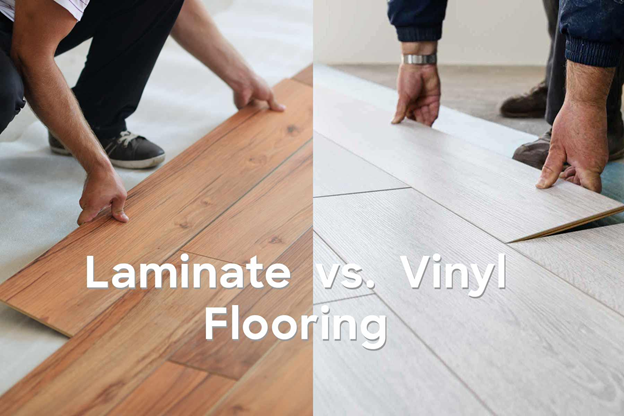
- Laminate Flooring: Technology has allowed for incredibly deep, realistic three-dimensional embossing that perfectly matches the photographic layer of wood grain. This gives it a highly authentic look. Furthermore, its rigid HDF core gives it a harder, more solid feel underfoot that is very similar to real hardwood.
- Vinyl Flooring: High-end luxury vinyl (LVP) also offers fantastic realism. However, because it is a more flexible material, it can sometimes feel softer or more “plastic-like” underfoot than laminate. Cheaper vinyl options, in particular, can look more synthetic.
The Verdict: For David’s living room, where achieving the most realistic wood look and feel is the top priority, high-quality laminate is a very strong contender.
Round 3: Durability & Maintenance
Both floors are known for being durable, but they excel in different ways.
- Scratch Resistance: This is a point of nuance. While vinyl is often marketed as the go-to for pets, many experts and even some flooring contractors note that laminate’s hard, aluminum oxide top layer is actually more resistant to fine scratches (like those from dog claws) than vinyl.
- Dent Resistance & Comfort: Vinyl is a softer, more resilient material. This makes it more comfortable to stand on for long periods and quieter to walk on. However, this softness also makes it more susceptible to being dented by heavy furniture. Laminate is harder and more dent-resistant but can be louder underfoot.
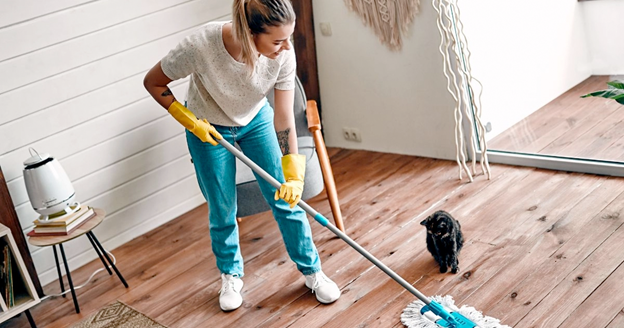
- Cleaning: Vinyl is easier to clean because it’s waterproof. It can be wet-mopped without worry. Laminate requires more care; it should only be cleaned with a damp—never wet—mop to prevent water from seeping into the seams.
The Verdict: It’s a tie, depending on your needs. For superior scratch resistance, laminate has an edge. For comfort, quietness, and worry-free cleaning, vinyl wins.
Round 4: Cost & Installation
Both laminate and vinyl are known as budget-friendly flooring options.
- Material Cost: The price range for materials is nearly identical, with both typically falling between $1 to $5 per square foot.
- Installation: Most modern laminate and vinyl planks feature a “click-and-lock” system that makes them easy to install for a seasoned DIYer. Professional installation costs are also very similar for these floating-floor systems.
The Verdict: This round is a dead heat. Both offer excellent value for the price.
In the end, both Maria and David made the right choice. Maria installed a beautiful, waterproof vinyl plank floor in her basement playroom, giving her total peace of mind. David chose a highly realistic, embossed laminate for his living room, getting the premium wood look he wanted well within his budget.
Laminate vs. Vinyl Showdown
| Feature | Laminate Flooring | Vinyl Flooring (LVP) | The Winner Is… |
| Water Resistance | Water-resistant surface, but core is vulnerable to damage. | 100% waterproof core and surface. | Vinyl |
| Realism & Feel | Often more realistic wood look and a harder, wood-like feel. | Very realistic, but can feel softer/more flexible underfoot. | Laminate (by a slight margin) |
| Scratch Resistance | Excellent; hard top layer is very resistant to fine scratches. | Good, but softer surface can be more prone to fine scratches. | Laminate |
| Comfort & Sound | Harder and can be louder underfoot. | Softer, more resilient, and quieter to walk on. | Vinyl |
| Cleaning & Maintenance | Requires care with a damp mop to avoid water damage. | Easy to clean; can be wet-mopped without worry. | Vinyl |
| Cost | Budget-friendly ($1-$5/sq. ft.). | Budget-friendly ($1-$5/sq. ft.). | Tie |
| Best for Rooms Like… | Living Rooms, Bedrooms, Hallways (Dry Areas). | Kitchens, Bathrooms, Basements, Laundry Rooms (Wet Areas). | Depends on the Room |